Using humor in marketing has many benefits. It can grab attention, challenge the mind, and make campaigns more interesting. Below, we’ll explore common types of funny marketing strategies and how they can go viral. Before using humor, consider its pros and cons to avoid mistakes and use it effectively. Also, be aware of the risks, like offending your audience, and learn how to use humor responsibly.
How Humor Works in Marketing
Research shows that humor’s success in marketing depends on the industry. While humor can attract attention and help people understand a message better, it doesn’t fit all products. For example, joking about cancer-fighting creams might upset some people. A study by Weinberger & Gulas and Fatt (2002) found that humor’s impact varies based on the product or service and how risky the topic is.
Humorous campaigns work best for products that sell and are already perceived to be funny by people. They grab attention more easily, and people tend to remember them longer. Naturally, there are some brands that do not want to use humor in advertising for, let’s say, status products. But humor is best when a brand wants to stand out from the crowd and has a strong personality. But using your message in a humorous way can pay best when you are communicating your message to an audience you know very well, and which already has a relationship with your brand.

Facebook and Snapchat ads are excellent methods of finding out more about your customers and what ruffles their feathers. While a lot of humor-based use research is done in the context of television commercials, there are broad principles of selling humor that can be applied to many other media. Humor has been employed by both a $5 million Super Bowl spot and in tweets from large chain business companies! It’s always challenging, of course, to employ humor in such a manner as to attract the customer’s attention naturally. That is why you must get accustomed to talking in this manner so that you can create the most highly desired impacts.
Unlike incongruity-based humor, or humor that is centered around paradoxical statements, relatable humor has a strong effect on consumer attention. Products that last consumers a long time and that they interact with regularly, such as a large kitchen appliance, for example, would be a great candidate for using relatable humor. Additionally, it helps increase brand recall in your audience with less effort.
Some audiences will be much more responsive to a humorous approach than others. Some channels or niche groups within the same audience can even respond differently. Regardless of the direction you take, humor in advertising campaigns depends on the response of individuals. Advertisers have a greater chance for better humorous campaigns when they interact with consumers in a unique way.
In addition, studies reveal that humor can really be able to shift the moods of individuals. It is also able to render brands identifiable amongst competitors. Of course, the angle and timing must be appropriate enough not to offend! Previous studies of the effectiveness of humor in advertising have generally found that it does not increase the effectiveness of serious messages.
However, when it comes to a more lighthearted stage, one-line jokes have been shown to improve message comprehension, support information processing, and improve operant conditioning. With findings like these, the effectiveness of any of your previous humorous campaigns can improve with a few adjustments.
Risks of Offending Your Audience
Using humor in marketing can be risky. If your audience doesn’t get your jokes, you might push them away. For example, health and insurance companies used to avoid humor in ads because it was seen as inappropriate. But when Allstate used slogans like “Are you in good hands?” or “Like a good neighbor,” it changed how the industry approached advertising.
Humor can make your brand stand out, but if done wrong, it can harm your reputation. If your audience finds your ads offensive, it’s better to try a different approach. The best humor directly relates to the product or topic you’re promoting-especially if it plays on familiar jokes or trends within that industry. If the jokes don’t fit, people may find them irrelevant or offensive and avoid your brand.

Potential for Virality
When launching a new ad campaign, think about whether your theme could go viral. The internet is a powerful tool, and using humor well can make your brand more visible. While negative sarcasm usually doesn’t work, positive and clever sarcasm can help.
Most popular social media platforms now use humor in their ads because people like to share funny content with friends and followers. If your posts are funny, they’re more likely to be shared and get more attention. When someone shares your video or post, it keeps getting seen by more people.
The main benefit of humor is that it grabs customers’ attention and helps them remember your brand. It creates strong emotional reactions and sticks in people’s minds-great for viral marketing. For example, Dollar Shave Club used funny videos to get over 25 million views for their shaving subscription service.
However, using humor wrong can backfire quickly. Whether humor goes viral depends on the content’s quality, creativity, and risks taken. Avoid sensitive topics! If you create content that’s both funny and popular, people will share it and help spread your message widely.
Humor works well on social media to connect with people and catch their attention-but not always. If you’re addressing a serious issue, switch to a softer tone that shows empathy and care. Too much humor can make your business seem insensitive or pushy when overused.
Using humor in marketing takes more effort than just telling a simple joke. This method needs careful planning. Here are the good and bad points of using humor to promote your product or service:
Listing Out The Potential Pros and Cons
This approach certainly calls for a lot more planning and important things to consider than your average knock-knock joke. Listed below are what we consider the positives and negatives of choosing to use humor in your marketing content and campaigns:
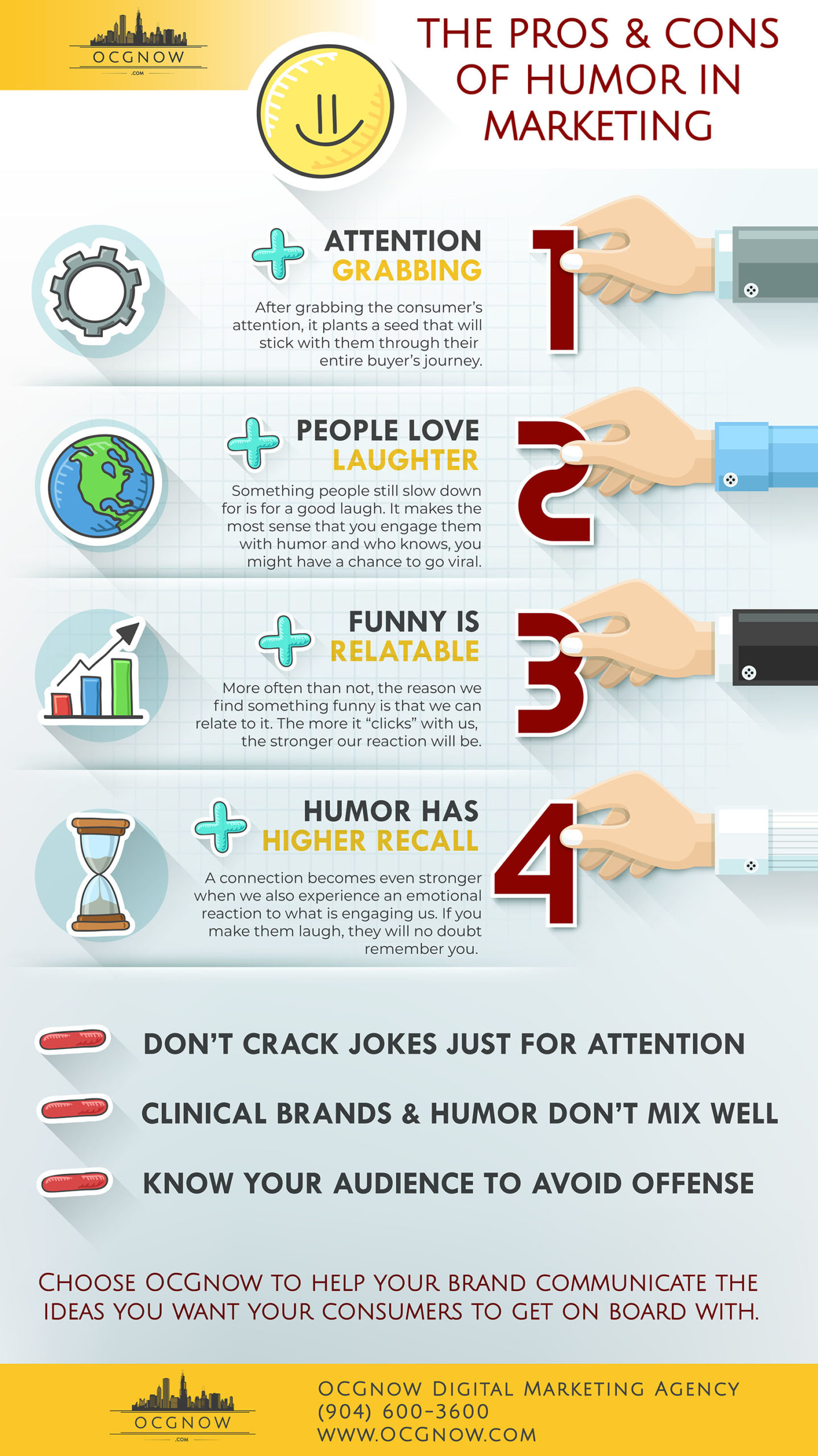
Pros
Grabs Attention
A great campaign not only promotes your brand and ideas but also creates a memorable impression of your company. Once you catch the customer’s attention, you plant a lasting idea that stays with them throughout their buying process.
People Enjoy Sharing Laughter
We live in a busy world where people often have short attention spans. But a good laugh is something people still pause for. Using humor is a smart way to engage them, and you might even go viral.
Funny Brands Feel More Relatable
Laughter is something everyone understands, even though different people find different things funny. Usually, we laugh because we can relate to it. The more it connects with us, the stronger our response.
Humor Helps People Remember Your Brand
When we feel an emotional response like laughter, the connection becomes stronger. If you make people laugh, they are more likely to remember you.

Cons
Making Jokes Just for Attention
Most people can tell when jokes aren’t genuine, and it feels uncomfortable when they do. It can make the situation awkward. If you make jokes only to follow a trend, your customers might not like it.
Humor Can Seem Immature
Some industries should avoid comedy to keep a more serious tone. For example, healthcare companies or others dealing with serious matters should avoid humor in marketing to keep their professionalism.
Humor Can Be Offensive
Some specific audiences might appreciate bold or edgy humor. These groups need honesty and usually respond best when they trust the brand.
Choose Your Online Capital Group
With so many ways to share your ideas with customers, it’s important to build a strong online reputation.
Comprehensive Digital Strategies:
Our team crafts tailored marketing plans to showcase your product or service across multiple platforms—social media, search engines, and more.
Targeted Advertising:
We focus on creating ads that speak directly to your ideal customers, encouraging real engagement and action.
Reputation Management:
OCGnow helps you monitor, protect, and grow your brand’s online presence so potential clients see you at your best.
Ready to Get Started?
Choose us at OCGnow to market your product or service and create ads that connect with people. Call us today at (904) 600-3600 to learn more.
This post was originally published on 8/8/2019 and updated on 2/12/2026 for accuracy and a larger scope of information.